History of the GMC Syclone: The Pickup That Beat a Ferrari
In 1991 GMC sold a compact pickup that hit 60 mph in 4.3 seconds, ran the quarter mile in 13.4, and beat a Ferrari 348 doing it. It also had a payload rating of 500 pounds and a warning against towing anything. It was barely a truck, and that is exactly the point.
Updated: August 31, 2026 // History
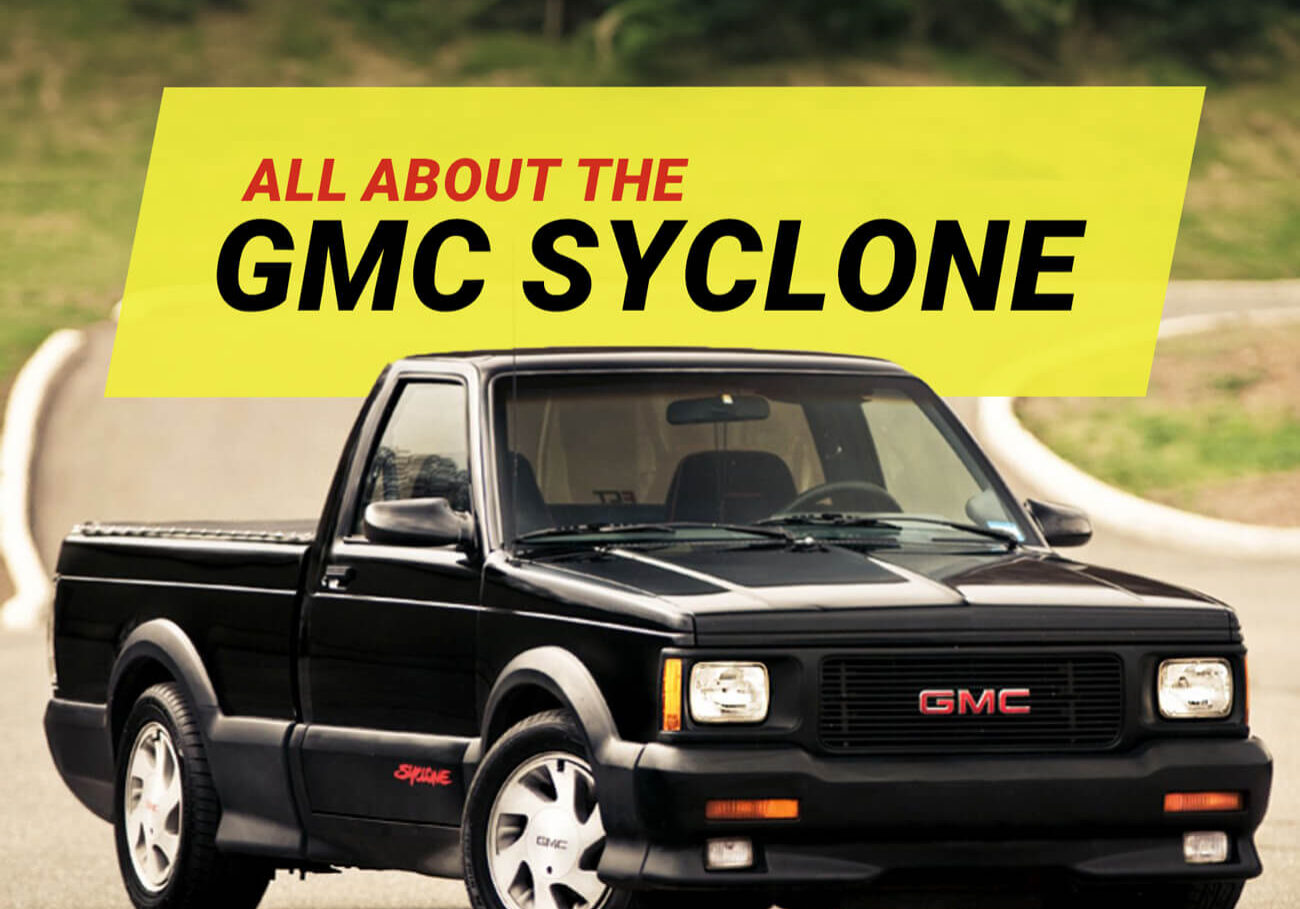
The Syclone is the answer to a question nobody at GMC was asked: what if a pickup truck were faster than the sports cars in the next lane?
GMC built it with Production Automotive Services, the same outfit behind the 1989 Pontiac Turbo Trans Am, by taking an ordinary Sonoma compact pickup and installing a turbocharged, intercooled V6 and all-wheel drive. The result was the fastest production truck in the world, and it stayed that way for years.
The Car and Driver test that made its name
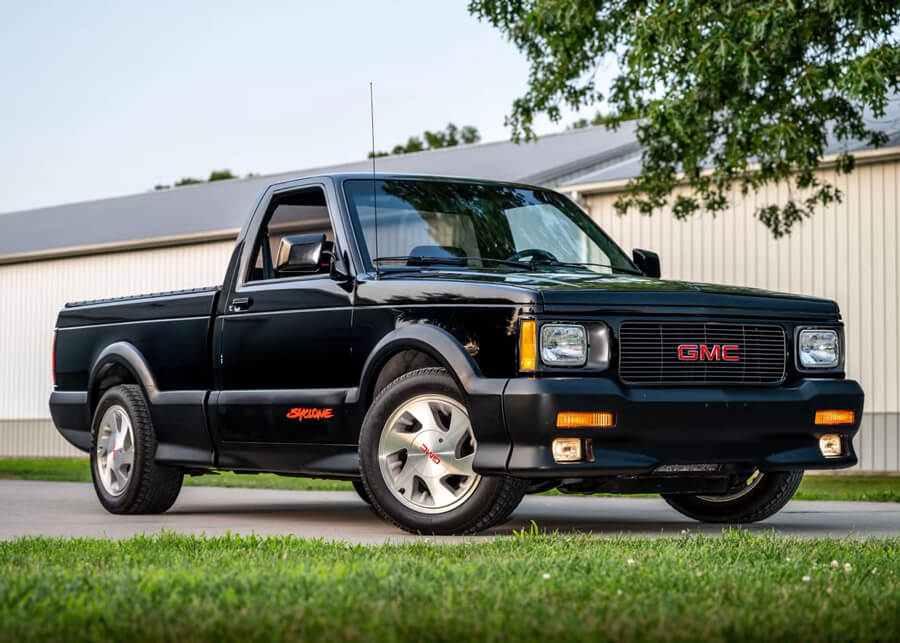
Car and Driver lined a Syclone up against a Chevrolet Corvette and a Ferrari 348ts, which was a joke setup with a serious result: the pickup won.
The Syclone reached 60 mph in 4.3 seconds and covered the quarter mile in 13.4 seconds at around 98 mph. The Ferrari, costing several times as much and carrying a mid-mounted V8, could not match it off the line. All-wheel drive and turbocharged torque beat a rear-drive Italian sports car at the one thing everybody measures, and the automotive press has never stopped talking about it.
Worth being precise, since the figures get muddled: 4.3 seconds to 60 and 13.4 through the quarter is the widely cited test result. If you see 14.1 quoted, that is a different run under different conditions. Our dedicated breakdown of how fast the GMC Syclone actually is goes into the numbers in more detail.
What was under it
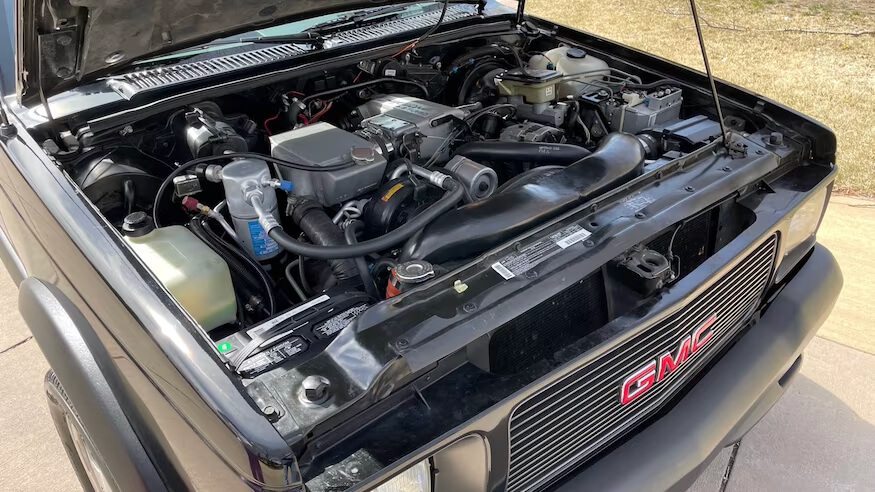
A 4.3-litre V6, turbocharged and intercooled, officially rated at 280 horsepower and 350 lb-ft. Most people who have driven one, and most people who have dyno tested one, think GMC was being modest with that figure.
The specification list is more serious than a marketing exercise would have been:
- Mitsubishi TD06-17C turbocharger
- Garrett water-to-air intercooler
- Hypereutectic pistons and nodular iron main bearing caps
- Uprated head gaskets and revised intake and exhaust plumbing
- A 48mm twin-bore throttle body taken from GM’s 5.7-litre small block
Power went through a 4L60 four-speed automatic, the only transmission offered, and into a BorgWarner 4472 transfer case splitting torque 35 percent front and 65 percent rear. That split is why it launched so hard: enough front bite to stop the rear axle wasting energy, enough rear bias to keep it feeling like a truck.
It was also the first production truck with anti-lock brakes on all four wheels, which was less glamorous and arguably more useful.
The part that makes it funny
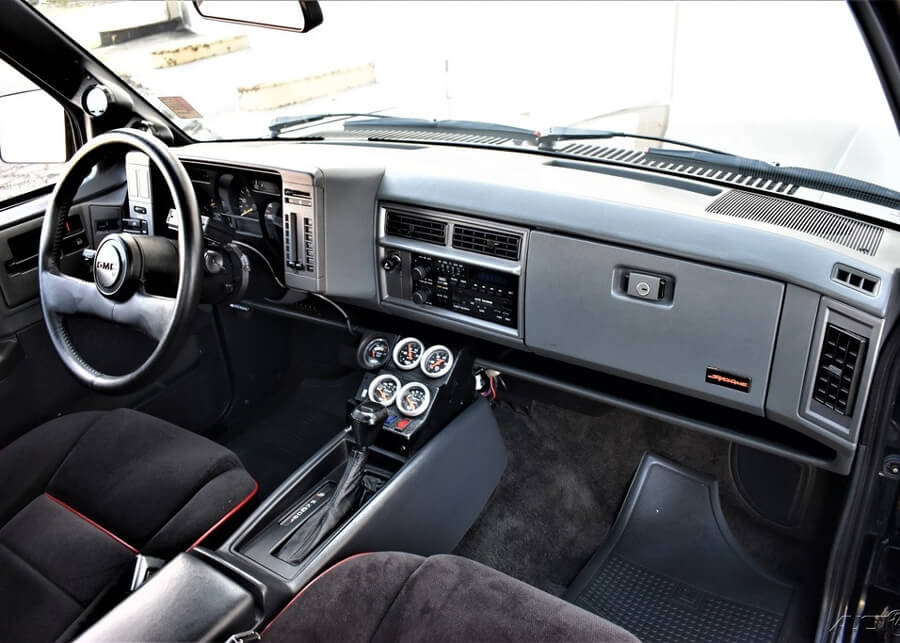
The Syclone could not do truck things.
Payload was rated at 500 pounds, roughly a third of what an ordinary Sonoma managed, because the all-wheel-drive hardware and the lowered suspension ate the capacity. GMC also advised owners not to tow with it at all.
So you had a pickup that could not carry much and was not supposed to pull anything, sold on the basis that it would humiliate a Ferrari. Every practical justification for buying a truck was absent. That is what makes it one of the purest expressions of the sleeper idea ever put into production: the shape promises a work vehicle and delivers something else entirely.
The special editions
Marlboro Syclone. Ten trucks built with American Sunroof Company and Shinoda Design Associates as prizes in a 1992 Marlboro racing promotion, with targa-style removable roof panels, Boyd Coddington wheels and PPG Hot Licks Red paint. Winners also got a day at the track with the racing team.
Indy and PPG Syclones. A small number appeared at the 1992 Indianapolis 500, one of which became the PPG pace truck in multicoloured paint with track modifications. It later went to the GM Heritage Collection and subsequently sold for around $66,000.
Middle East cars. Roughly 150 Syclones were built for export to Saudi Arabia, with metric instrument clusters and calibration for leaded fuel. They are among the rarest variants and rarely surface in the United States.
The family: Syclone, Typhoon and Sonoma GT
GMC built three related vehicles with PAS. The Sonoma GT was the naturally aspirated one, quick but not remarkable. The Syclone was the turbocharged pickup. And the GMC Typhoon put the same drivetrain into a two-door Jimmy SUV for 1992 and 1993.
The Typhoon is the more usable vehicle by some distance, since it has a back seat, a roof over the cargo area, and none of the Syclone’s payload embarrassment. It also sold in far greater numbers, which is why it remains the cheaper of the two.
For more on how the pair came together, see our roundup of Syclone and Typhoon facts.
How many, and why it ended
GMC built 2,995 Syclones for 1991 and a further three in 1992, which is a total under 3,000. It was expensive for a compact pickup, at close to $26,000 when a base Sonoma cost a fraction of that, and it asked buyers to spend Corvette-adjacent money on a truck that could not tow.
That was always going to be a small audience. GMC moved on, the Typhoon followed for two years, and the idea of a genuinely fast factory pickup went quiet until Ford and Dodge revived it later in the decade.
What they are worth now
Considerably more than they cost new. Low-mileage, unmodified Syclones have moved firmly into collector territory, and clean examples trade well into five figures with the best cars going substantially higher. Rarity, an unrepeatable concept, and a genuinely famous magazine result have all pushed values up.
If you are shopping, the usual rules for a thirty-five-year-old turbocharged vehicle apply. Check for boost leaks and evidence of overheating, confirm the transfer case and viscous coupling work properly, and be wary of anything running more boost than the factory intended. Documentation matters enormously at this end of the market.
Why it still matters
The Syclone proved that a truck could be a performance vehicle rather than a compromise, and everything from the Ford Lightning to the modern electric performance pickups traces back to the argument it settled. It also happens to be the best possible answer to anyone who thinks American engineering in the early nineties was uninteresting.
If the general idea appeals, our list of the best modern sleeper cars covers what has taken its place, and the Chevrolet SS is the same instinct applied to a sedan two decades later.
Common questions
How fast is the GMC Syclone?
0 to 60 mph in 4.3 seconds and the quarter mile in 13.4 seconds at around 98 mph, based on the widely cited magazine test. Top speed was limited to roughly 126 mph by the tyres fitted.
Did the Syclone really beat a Ferrari?
Yes. In a Car and Driver comparison it out-accelerated a Ferrari 348ts, which is the single reason most people know the truck exists.
What engine does the Syclone have?
A turbocharged and intercooled 4.3-litre V6 rated at 280 horsepower and 350 lb-ft, driving all four wheels through a four-speed automatic.
How many GMC Syclones were made?
2,995 for the 1991 model year plus three in 1992, so fewer than 3,000 in total.
Can you tow with a Syclone?
GMC advised against it, and payload was rated at only 500 pounds. It wears a pickup body but it was never intended to work like one.
Syclone or Typhoon?
The Syclone is rarer and more valuable. The Typhoon is more practical, more common and cheaper, with the same drivetrain in an SUV body. If you intend to actually drive it, the Typhoon makes more sense.